Too Much of a Good Thing: How Antioxidant Overload May Be Quietly Sabotaging Your Mitochondria
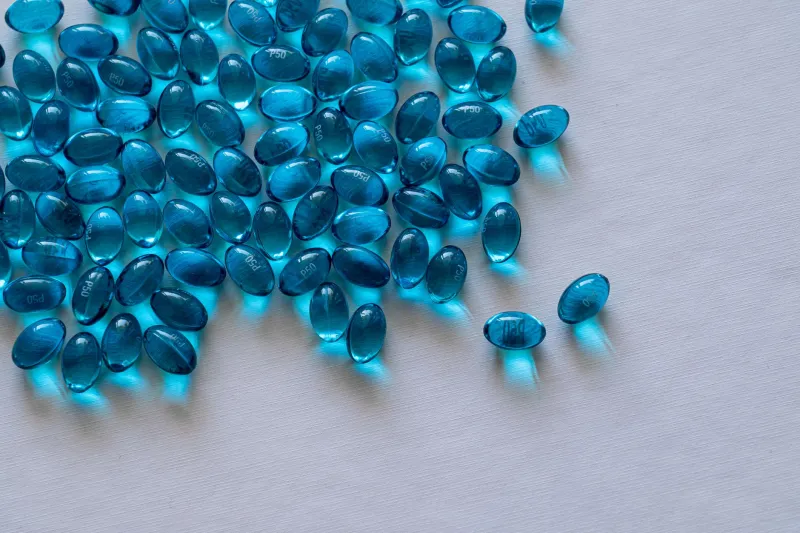
Walk into any American health food store or scroll through a wellness influencer's supplement haul, and you will encounter an almost universal assumption: antioxidants are unambiguously good, and more of them is better. Bottles of high-dose vitamin C, alpha-lipoic acid, N-acetyl cysteine, and CoQ10 line shelves with promises of cellular protection, anti-aging benefits, and peak energy output. The logic seems airtight—oxidative stress damages cells, antioxidants neutralize oxidative stress, therefore more antioxidants equal healthier cells.
Except the science, when examined carefully, does not quite support that conclusion. In fact, a growing body of research suggests that aggressive antioxidant megadosing may interfere with some of the most critical maintenance processes your mitochondria rely upon to stay functional, adaptable, and efficient.
This is not an argument against antioxidants. It is an argument for understanding why your mitochondria need a measured amount of oxidative tension—and why removing that tension entirely may be working against you at the cellular level.
The Signal Your Cells Were Never Meant to Silence
Mitochondria are not passive energy factories. They are dynamic, responsive organelles that continuously monitor cellular conditions and adjust their behavior accordingly. One of the primary signals they rely upon is reactive oxygen species, or ROS—the very molecules that antioxidant supplements are designed to neutralize.
In small, controlled quantities, ROS function as molecular messengers. They activate pathways that trigger mitochondrial biogenesis (the creation of new mitochondria), stimulate the expression of endogenous antioxidant enzymes like superoxide dismutase, and initiate mitophagy—the selective process by which damaged or dysfunctional mitochondria are identified and cleared from the cell.
When exogenous antioxidants flood the system in quantities that far exceed physiological norms, these signals are suppressed before they can complete their intended function. The cell, in effect, receives a false report that everything is operating optimally. Damaged mitochondria are not flagged for removal. Biogenesis signals are not fully activated. The internal quality-control system operates below capacity.
This phenomenon is not theoretical. A landmark study published in the Proceedings of the National Academy of Sciences demonstrated that high-dose vitamin C and E supplementation blunted the metabolic adaptations induced by exercise in human subjects—adaptations that are mediated, in part, by transient ROS signaling. The participants who took the supplements experienced reduced improvements in insulin sensitivity compared to those who did not.
Hormesis: The Science of Productive Stress
The concept underlying this paradox has a name: hormesis. Derived from the Greek word meaning "to set in motion," hormesis describes the biological phenomenon whereby low-to-moderate doses of a stressor produce beneficial adaptive responses, while excessive doses produce harm.
The hormetic model applies to a remarkably wide range of biological stressors—heat, cold, caloric restriction, exercise, and yes, oxidative stress. What these stressors share is the capacity to activate cellular adaptation machinery when administered within a tolerable range. Push beyond that range, and the benefit inverts into damage. Eliminate the stressor entirely, and the adaptation machinery goes dormant.
For mitochondria specifically, hormesis is not an abstract concept—it is a core operating principle. Cells that are never challenged do not optimize. They maintain baseline function until cumulative damage, unaddressed by a sluggish quality-control system, begins to erode their performance over time.
This is why exercise, despite generating significant oxidative stress acutely, consistently improves mitochondrial density, efficiency, and resilience over the long term. The transient stress is the mechanism, not the obstacle.
Autophagy and Mitophagy: The Cleanup Crews You May Be Undermining
Among the most consequential processes affected by antioxidant overload is mitophagy—a specialized form of autophagy in which the cell selectively degrades mitochondria that have become dysfunctional, fragmented, or energetically inefficient.
Mitophagy is not a sign of cellular distress. It is a sign of cellular intelligence. A cell that regularly clears its damaged mitochondria and replaces them through biogenesis maintains a higher-quality mitochondrial population than one that retains every organelle regardless of its functional state. The analogy is straightforward: a manufacturing facility that removes faulty equipment and replaces it with upgraded machinery outperforms one that simply accumulates malfunctioning units.
ROS signaling plays a direct role in initiating mitophagy. Specifically, the accumulation of ROS within a compromised mitochondrion contributes to the collapse of its membrane potential, which triggers the PINK1-Parkin pathway—a molecular tagging system that marks the organelle for autophagic clearance.
When systemic antioxidant levels are artificially elevated through supplementation, this tagging mechanism is disrupted. Mitochondria that should be cleared are not. The cell's quality threshold shifts downward, and the average functional capacity of the mitochondrial network gradually declines—the opposite of the outcome most supplement users are pursuing.
The Stack Problem: When More Supplements Mean More Interference
Modern supplement culture in the United States has embraced the concept of "stacking"—combining multiple compounds in hopes of achieving synergistic benefits. While some combinations are well-supported by evidence, the indiscriminate stacking of antioxidant compounds presents a compounding interference risk.
Consider a common stack: high-dose vitamin C (2,000 mg), vitamin E (400 IU), alpha-lipoic acid (600 mg), and NAC (1,200 mg), taken daily alongside a high-antioxidant diet rich in berries, dark leafy greens, and green tea. Each individual component may have merit within a physiological context. Together, they may create a systemic antioxidant environment so saturated that the mitochondrial signaling environment is fundamentally altered.
The issue is not toxicity in the conventional sense. Most of these compounds are safe at the doses described. The issue is functional interference—a suppression of the very adaptive responses the user is attempting to support.
A More Precise Approach to Mitochondrial Support
None of this suggests that nutritional support for mitochondrial function is misguided. It suggests that the approach requires greater precision and a clearer understanding of the goal.
Several principles are worth considering:
Timing matters. There is substantial evidence that taking high-dose antioxidants in close proximity to exercise blunts training adaptations. If your goal is to improve mitochondrial fitness through physical activity, separating antioxidant supplementation from your training window by several hours may preserve the adaptive ROS signal without sacrificing the protective benefits at other times.
Dose calibration is essential. The therapeutic range for many antioxidant compounds is far lower than what is commonly marketed. Supporting endogenous antioxidant enzyme systems—through compounds like sulforaphane, which activates the Nrf2 pathway—may offer more physiologically coherent support than flooding the system with exogenous antioxidants.
Prioritize mitophagy-supporting behaviors. Intermittent fasting, caloric restriction, and regular aerobic exercise all stimulate mitophagy through pathways that are not dependent on antioxidant suppression. These interventions support cellular cleanup by activating AMPK and inhibiting mTOR, mechanisms that work in concert with, rather than against, the ROS signaling environment.
Assess your baseline. Not everyone is operating from a position of antioxidant excess. Individuals with significant oxidative burden—due to chronic illness, environmental exposures, or metabolic dysfunction—may genuinely benefit from higher supplemental antioxidant support. The key is matching the intervention to the actual cellular environment, not applying a universal protocol.
Rethinking the Default Assumption
The wellness industry has an understandable bias toward addition. New supplements, higher doses, and more comprehensive stacks are easier to market than nuanced discussions about cellular signaling thresholds. But the mitochondria in your cells are not responding to marketing narratives—they are responding to the precise biochemical conditions you create through your choices.
The most effective approach to mitochondrial health is not one that eliminates all cellular stress. It is one that calibrates stress intelligently, preserves the signaling architecture that drives adaptation, and supports the cleanup processes that maintain a high-functioning cellular network over time.
Sometimes, the most powerful thing you can do for your cells is to get out of their way.