Blended and Betrayed: How Your Morning Smoothie May Be Quietly Overwhelming Your Mitochondrial Energy System
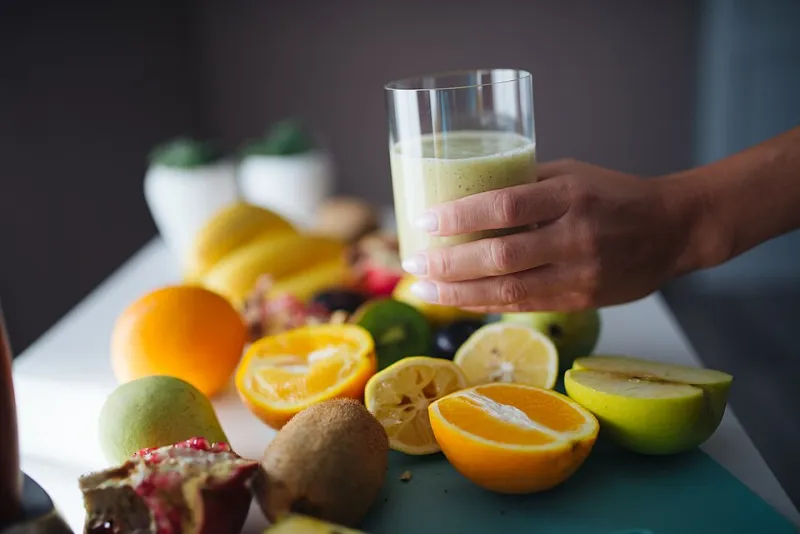
Photo: Shixart1985, CC BY 2.0, via Wikimedia Commons
The Wellness Paradox in a Glass
Few morning rituals feel more virtuous than blending a vibrant mixture of frozen berries, banana, spinach, and plant-based protein powder into a single, nutrient-dense beverage. The smoothie has become a symbol of intentional health—a portable meal that promises vitamins, antioxidants, and sustained energy in under five minutes. Yet a growing body of metabolic research suggests that the very act of liquefying whole foods may be quietly working against the cellular machinery you are trying to support.
At the heart of this discussion is the mitochondria—the organelles responsible for converting glucose and fatty acids into adenosine triphosphate (ATP), the currency your body uses for virtually every biological process. When that conversion is overwhelmed by a rapid surge of sugar, the consequences extend well beyond a mid-morning energy crash.
What Blending Actually Does to Whole Foods
When you eat a whole apple, your digestive system must first break down intact cell walls, fiber matrices, and structural compounds before glucose enters the bloodstream. This process is slow by design. The mechanical work of chewing, the enzymatic activity in saliva, and the gradual transit through the gastrointestinal tract collectively modulate how quickly sugars reach the portal circulation.
Blending eliminates most of that friction. The mechanical disruption of a high-speed blender ruptures plant cell walls, liberates bound sugars, and reduces fiber to a form that no longer functions as an effective barrier to glucose absorption. A 2017 study published in the American Journal of Clinical Nutrition found that blended fruit produced a significantly higher glycemic response compared to eating the same fruit in whole form, even when total sugar content was identical. The structural integrity of food, it turns out, is a metabolic variable—not merely a textural one.
Fructose presents an additional layer of complexity. Many smoothie recipes rely heavily on high-fructose fruits such as mango, pineapple, and dates for palatability. Unlike glucose, fructose is metabolized almost exclusively in the liver, where it bypasses the regulatory enzyme phosphofructokinase and enters glycolysis downstream of the primary control point. In excess, this pathway generates acetyl-CoA faster than the mitochondrial TCA cycle can process it, promoting fat synthesis, oxidative stress, and ultimately, mitochondrial dysfunction.
The Insulin Surge and Its Downstream Cellular Effects
Rapid glucose absorption triggers a proportional insulin response. In the short term, elevated insulin drives glucose into cells—which sounds beneficial until you consider what happens when delivery outpaces demand. Mitochondria are not infinitely scalable processors. When substrate availability exceeds the electron transport chain's capacity to generate ATP, electrons begin to accumulate and leak from complexes I and III, generating reactive oxygen species (ROS) as a byproduct.
This mitochondrial ROS overproduction is not merely an abstract biochemical concern. Chronic low-grade oxidative stress damages mitochondrial DNA, impairs cristae morphology, and reduces the efficiency of ATP synthesis over time. The result is a gradual erosion of cellular energy capacity—precisely the outcome that most smoothie enthusiasts are trying to prevent.
Repeated insulin spikes also suppress a metabolic process called mitophagy, the cellular housekeeping mechanism by which damaged or dysfunctional mitochondria are identified and recycled. Without regular mitophagy, defective organelles accumulate, further degrading the overall efficiency of cellular energy production.
Metabolic Data on Common Smoothie Formulas
Not all smoothies carry the same metabolic burden. Consider three common archetypes:
The Tropical Blend (mango, pineapple, banana, coconut water): This combination can deliver upward of 60 grams of sugar, predominantly fructose and glucose, with minimal protein or fat to blunt absorption. Continuous glucose monitoring data from clinical nutrition studies routinely show this type of beverage producing blood glucose excursions comparable to a candy bar in metabolically compromised individuals.
The Green Protein Smoothie (spinach, frozen berries, pea protein, almond butter, flaxseed): The addition of fat, protein, and intact fiber meaningfully attenuates the glycemic response. Blood glucose peaks are lower, occur later, and return to baseline more gradually—a profile that is considerably more compatible with stable mitochondrial substrate delivery.
The Açaí Bowl Variant (açaí, granola, honey, banana): Despite its health-food reputation, this preparation frequently contains more than 70 grams of sugar and limited protein. The granola adds refined carbohydrates that compound the glycemic load further.
The distinguishing factor across these examples is not caloric content but rather the ratio of fast-absorbing carbohydrates to macronutrients that slow gastric emptying and moderate insulin response.
Practical Strategies for Mitochondria-Supportive Blended Nutrition
The goal is not to abandon blended beverages entirely but to reformulate them in ways that respect the mitochondria's preference for steady, controlled substrate delivery.
Prioritize low-glycemic produce. Berries—particularly blueberries, raspberries, and blackberries—offer polyphenols and anthocyanins that actively support mitochondrial function while contributing a fraction of the sugar load found in tropical fruits. Dark leafy greens add micronutrients without glycemic consequence.
Anchor every smoothie with fat and protein. Whole avocado, full-fat coconut milk, nut butters, and high-quality protein powders (whey, collagen, or pea-based) slow gastric emptying and blunt the insulin response. Aim for at least 20 grams of protein and 10 grams of fat per serving.
Add structural fiber. Whole chia seeds, ground flaxseed, and psyllium husk reintroduce some of the fibrous resistance that blending removes. These ingredients do not restore the full structural matrix of whole fruit, but they meaningfully slow carbohydrate absorption.
Eat, don't drink, when possible. On days when metabolic precision matters most, consider consuming the same ingredients in whole or minimally processed form. A bowl of whole berries, a handful of nuts, and a hard-boiled egg delivers nearly identical nutrients with a far more favorable glycemic profile.
Time strategically. Consuming a smoothie immediately after resistance training—when muscle glucose uptake is elevated and insulin sensitivity is heightened—reduces the risk of mitochondrial substrate overload compared to consuming it in a fasted or sedentary state.
Rethinking the Ritual
The smoothie is not inherently a health liability. It is, however, a tool that requires the same precision and intentionality that cellular health demands in every other domain. The mitochondria do not distinguish between organic mango and processed sugar when both arrive in the bloodstream within the same metabolic window. What matters is the rate of delivery, the composition of the substrate, and the cellular context in which that substrate is received.
Reframing the smoothie—not as a shortcut to nutrition, but as a precision instrument requiring thoughtful formulation—may be one of the more impactful adjustments available to anyone serious about sustaining cellular energy over the long term.